If It Requires a Blender We're Out: Embroidery Review
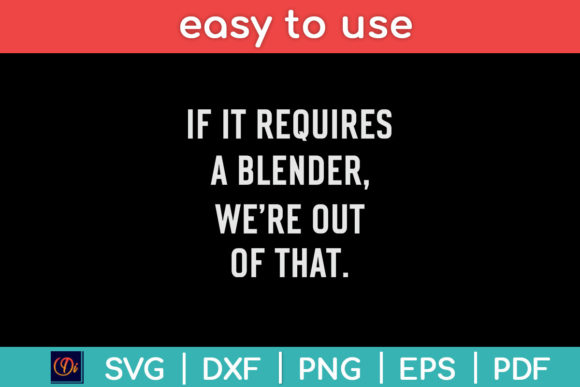
As someone who has spent years navigating the fine line between a funny slogan and a wearable masterpiece, I approach every new machine embroidery design with a critical eye. The latest addition to my testing queue is If It Requires a Blender We're Out of That Funny Bartender Svg. At first glance, this piece of Graphics looks like a standard cut file for vinyl or heat transfer, but as an embroidery designer, I am constantly looking for ways to translate these digital assets into textured, stitched reality. Does this specific phrase hold up under the scrutiny of a needle and thread? Let's dive into how this design translates from a screen to a finished product.
The Visual Personality and First Impression
When I first opened the file for If It Requires a Blender We're Out, the mood was immediately clear. It is bold, humorous, and unapologetically casual. The layout relies heavily on typography, which presents both an opportunity and a challenge for embroidery. In the world of Crafts, text-based designs often struggle if the font choice isn't robust enough to handle the mechanics of stitching. This particular phrase has a strong visual rhythm that suggests it would work exceptionally well as a statement piece on custom apparel.
The design feels like it belongs in a kitchen setting or a bar-themed gift shop. It has that "inside joke" quality that makes for excellent personalized gifts. However, before I commit to stitching this on a client's order, I need to assess how the letterforms will behave when converted into fill stitch and satin stitch. The sharp angles in words like "Blender" and "Out" require careful digitization to prevent bird nesting or uneven tension. If the original vector lines are too thin, they might disappear once covered by thread, losing the punchline entirely.
Real-World Application: The Apron Project
To truly understand the potential of If It Requires a Blender We're Out, I imagined a real-life scenario: creating a custom embroidered apron for a friend who loves cooking but hates complicated recipes. An apron is the perfect canvas for this kind of humor. Unlike a delicate baby embroidery project where softness is key, an apron can handle a slightly denser stitch density. The fabric is usually sturdy cotton or canvas, providing a stable base that won't pucker easily under the weight of the thread.
In this context, the design transforms from a simple graphic into a functional piece of personality. Placing the text across the chest pocket area or centered on the bib creates a focal point that draws the eye. When I visualize the finished product, I see high-contrast thread colors—perhaps a deep navy blue on a white background or a vibrant red on charcoal gray. This contrast is crucial for readability. If the thread color blends too closely with the fabric, the joke gets lost, and the value of the handmade product diminishes.
For a Etsy seller or small shop owner, this apron could be a bestseller during the holiday season. It fits perfectly into categories like "Funny Kitchen Gifts" or "Bartender Humor." The tactile nature of embroidery adds a layer of perceived value that a simple printed decal cannot match. Customers often pay a premium for embroidered patches or direct stitching because it feels more durable and artisanal than a vinyl transfer.
Navigating Fabric Challenges and Technical Limits
While the apron scenario works beautifully, not every fabric is suitable for this design. As a professional reviewer, I must warn against using If It Requires a Blender We're Out on stretchy fabrics like jersey knit without proper stabilization. The long horizontal lines of text can cause the fabric to distort, leading to wavy letters that ruin the professional look. Similarly, very thin fabrics might show the running stitch outlines through to the back, making the garment uncomfortable to wear.
Another critical consideration is the hoop size. This phrase is relatively long. If you attempt to fit the entire sentence into a 4x4 inch hoop, you risk crowding the stitches, which leads to poor definition and potential thread breakage. For larger projects like a tote bag design or a sweatshirt, you might need a 6x10 or even a 10x10 hoop to maintain the integrity of the lettering. Always check your machine's maximum capacity before starting. If the design exceeds your hoop, you may need to split the text into two separate rows, which changes the visual flow and requires precise alignment.
Dark fabrics present another hurdle. Without a good stabilizer or a backing technique like applique, the black or dark-colored threads might not pop against a black sweatshirt. In such cases, using a light-colored topstitch or adding a satin border around the text can help define the edges. This is where understanding thread colors becomes essential. A test run on scrap fabric is non-negotiable. Never skip the step of checking how the design looks in black and white mockups before committing to expensive materials.
Strategic Use for Craft Businesses
For those running a craft business, If It Requires a Blender We're Out offers versatility beyond just clothing. Consider adapting it for kitchen towels, pillow covers, or even as part of a wedding gift set for a couple who enjoys entertaining. The key is consistency. If you are building a brand around humorous, relatable home goods, this design asset fits right in. It reinforces your brand voice and helps customers connect with your small shop product offerings.
However, always remember to confirm licensing terms. While the source mentions compatibility with Cricut and Silhouette machines for print-and-cut files, embroidery usage often falls under different rules. Ensure you have the rights to use this digital embroidery file for commercial purposes if you plan to sell the finished items. Selling a physical item with this design is one thing; selling the digitized file itself is another. Clarity here protects your business reputation and ensures long-term success.
Final Verdict on Design Viability
In conclusion, If It Requires a Blender We're Out is a strong contender for commercial embroidery projects, provided you respect its technical requirements. It shines on sturdy fabrics like denim, canvas, and heavy cotton blends. It excels on items where durability and humor intersect, such as aprons, caps, and tote bags. The design's success hinges on proper digitization, adequate stabilizer usage, and thoughtful color selection.
As designers, our job is to anticipate how a flat image will behave in three dimensions. This phrase has the potential to be a crowd-pleaser, but only if executed with care. By testing on scrap fabric, respecting the limits of your hoop size, and choosing the right fabric texture, you can turn this witty slogan into a high-quality, marketable item. Whether you are a hobbyist making a gift or an entrepreneur stocking your inventory, this design proves that a little humor, stitched correctly, goes a long way.