No Loafin Around: A Designer's Embroidery Review
As a designer who has spent years translating digital concepts into tangible thread, I approach every new machine embroidery design with a critical eye. The market is flooded with files that look perfect on a screen but fall apart under the needle. When I first opened the file for No Loafin Around, my immediate reaction was one of cautious optimism. This isn't just another generic kitchen quote; it carries a specific personality that demands careful placement and thoughtful execution. For those of us running a craft business or selling on Etsy, the difference between a bestseller and a return often lies in how well we anticipate the final finished product.
The Visual Personality of No Loafin Around
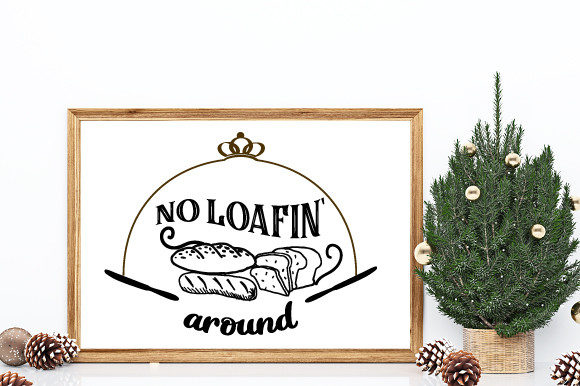
The phrase "No Loafin Around" suggests movement, energy, and a touch of humor. In the context of Graphics and Crafts, this word art design relies heavily on its typography to convey that mood. Visually, the layout feels dynamic rather than static. It is not a delicate floral motif or a complex scene requiring thousands of stitches. Instead, it leans into bold lettering and perhaps some playful flourishes that mimic the concept of speed or action.
When I visualize this as an embroidery project, the strength of the design lies in its clarity. Unlike intricate illustrations that can get muddy when stitched, this type of word art thrives on definition. However, because it is originally marketed as a vinyl decal cutting file for machines like Cricut Explore or Silhouette, there is a crucial translation step required for us embroiderers. We must ensure that the vector lines are converted into a proper digital embroidery file format that accounts for stitch direction and density. If you are importing this directly without re-digitizing or converting it properly, you risk ending up with jagged edges or uneven fill stitch areas that ruin the professional look.
Real-World Application: The Custom Apron Scenario
To truly test the viability of No Loafin Around, let's place it in a real-world scenario. Imagine I am preparing a batch of custom aprons for a local boutique shop. These aren't just plain cotton; they are high-quality, heavy-duty fabric intended for serious home cooks. The goal is to create a personalized gift that feels premium yet fun.
In this setting, No Loafin Around becomes the focal point. Placed centrally on the bib of the apron, the text needs to pop. I would likely choose a contrasting thread color—perhaps a vibrant red or deep navy against a cream background—to maximize readability. The challenge here is the stitch density. If the original digitization is too dense, the thick canvas of the apron might pucker around the letters, creating a wavy, unprofessional surface. Conversely, if the density is too low, the design will look flimsy and cheap.
For a personalized gift like this, the recipient expects quality. They want to see crisp edges on the letters and smooth fills. If the design includes small decorative elements, such as tiny stars or motion lines implied by the phrase, these need to be large enough to hold their shape after washing. A common pitfall with text-based designs is that small details can disappear or become blobs of thread if the hoop size is too small or the stabilizer is insufficient.
Navigating Fabric Challenges and Placement
While an apron is a sturdy candidate, No Loafin Around requires caution when applied to other substrates. As an experienced decorator, I advise against using this design on highly textured fabrics like terry cloth towels unless you use a very open running stitch or a specialized technique. The texture of the loops in a towel can interfere with the clean lines of the word art, making the text hard to read from a distance.
Similarly, stretchy fabrics like jersey knit for sweatshirt embroidery present a unique hurdle. The elasticity of the material means the design must be hooped tightly and stabilized aggressively. Without the right stabilizer, the tension from the stitching could cause the letters to warp over time, especially after the garment goes through the wash. If you are considering this for a tote bag design, remember that canvas bags have varying thicknesses. A thin, flimsy tote will require tear-away stabilizer, while a heavy-duty grocery bag might need cut-away to support the weight of the thread.
One area where I would exercise extreme caution is on curved surfaces like caps. While the phrase is catchy, fitting a multi-word design onto the limited flat space of a baseball cap front is risky. The curvature can distort the text, making "No Loafin Around" look stretched or compressed. Unless you have a specialized cap frame and have tested the design extensively, it is safer to stick to flat surfaces like pillow covers, baby clothes, or patches.
Technical Considerations for Professional Results
Before committing to a production run, I always recommend a rigorous testing phase. Start by printing a mockup of the design at actual scale. Does the font size look appropriate for your intended hoop size? Is the spacing between letters tight enough to prevent fabric show-through but loose enough to avoid thread bunching?
Once you move to the machine, stitch out a test sample on scrap fabric that matches your final material. Check the back of the embroidery. You should see minimal jump stitches and no excessive thread buildup. Pay close attention to the satin stitch borders if the design uses them; these are prone to looping if the tension is off. Also, verify that the stitch density allows the fabric to breathe. Over-stitching can make the area stiff and uncomfortable, which is particularly important for items like baby embroidery or clothing worn next to the skin.
Color contrast is another vital factor. Test the design in black and white mockups first to ensure the legibility holds up without relying solely on color. Then, compare light and dark fabric backgrounds. A design that looks great on white might vanish on charcoal gray if the thread colors aren't adjusted accordingly. For commercial embroidery, consistency is key. Your customers need to know that every item they buy looks exactly like the photos on your website.
Business Value and Licensing Awareness
From a business perspective, No Loafin Around offers strong potential for Etsy sellers and small shop owners. Kitchen-themed items are perennial favorites, and a humorous take on cooking adds a layer of engagement that plain designs lack. It fits perfectly into holiday gift collections, bridal shower favors, or retirement party merchandise. The visual appeal of the design can significantly boost buyer engagement because it speaks directly to the customer's sense of humor.
However, as responsible creators, we must address the licensing. The product description notes that this is a digital download for paper crafting programs. Before selling any handmade product featuring this design, you must confirm the license terms. Does the license allow for commercial use? Are there limits on the number of items you can sell? Can you sell the digital embroidery file itself, or only the physical goods? Ignoring these details can lead to legal issues that threaten your entire brand.
Furthermore, consider how this design aligns with your overall brand identity. If your shop focuses on elegant, minimalist decor, a bold, funny kitchen phrase might feel out of place. But if your brand is built on fun, quirky, and relatable design assets, then No Loafin Around is a natural fit. It helps build customer trust by showing that you understand your audience and care about selecting designs that resonate.
Final Thoughts on Execution
In conclusion, No Loafin Around is a versatile and engaging design that, when executed correctly, can elevate your product line. It is not a "set it and forget it" file; it requires the same attention to detail as any high-end applique design or complex illustration. By testing on the right fabrics, choosing appropriate stabilizers, and respecting the licensing terms, you can turn this simple phrase into a profitable and beloved item in your catalog.
Whether you are making a single personalized gift for a friend or producing a batch of custom apparel for your online store, the success of the project depends on your preparation. Take the time to review the stitch count, check the thread colors, and visualize the final result. With the right approach, No Loafin Around will not only look great but also stand the test of time, ensuring your customers keep coming back for more.